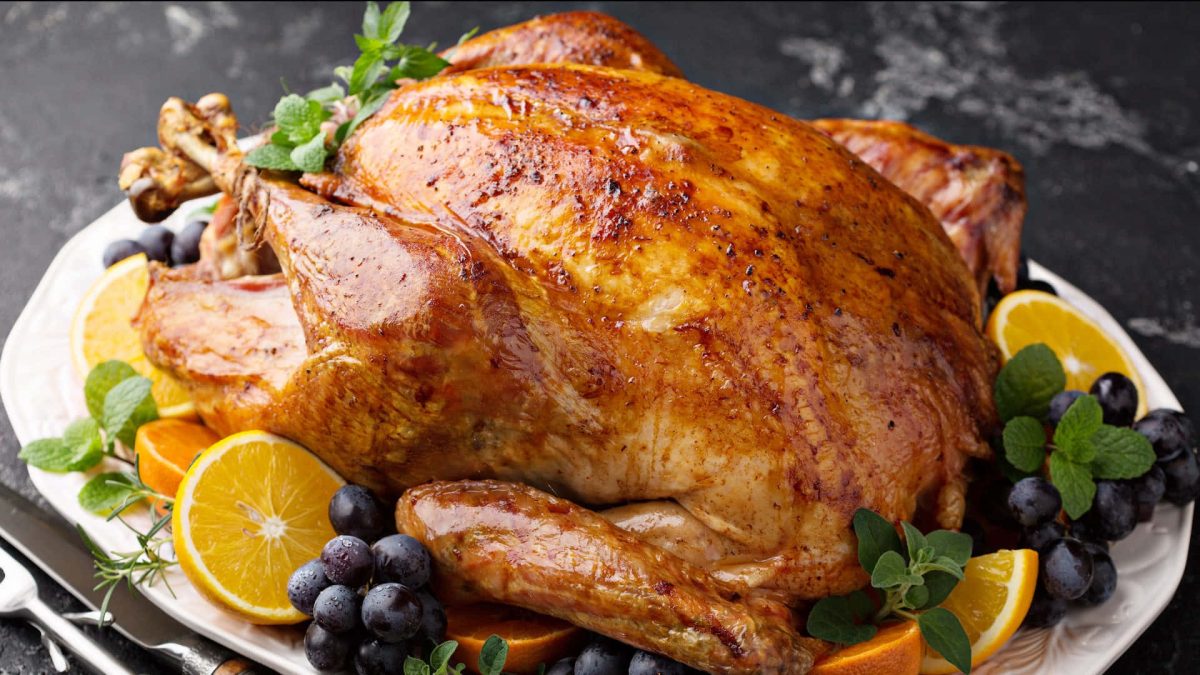
THE BEST THANKSGIVING TURKEY – FULL RECIPE
INGREDIENTS LIST
For the Brine (12–24 hours):
- 1 gallon water (plus extra if needed to fully submerge turkey)
- 1 cup kosher salt
- ½ cup brown sugar
- 1 tablespoon whole peppercorns
- 4 bay leaves
- 6 garlic cloves, smashed
- 2 oranges, sliced
- 1 lemon, sliced
- 3 sprigs rosemary
- 5 sprigs thyme
- Optional: 1 tablespoon whole allspice, 1 teaspoon crushed red pepper flakes
For the Turkey Prep:
- 1 whole turkey (12–16 lbs), thawed
- 1 stick (½ cup) softened butter
- 3 tablespoons olive oil
- 6 cloves garlic, minced
- 2 teaspoons salt
- 1 teaspoon black pepper
- 1 teaspoon paprika
- 1 teaspoon dried thyme or rosemary
- 1 onion, quartered
- 1 apple, quartered
- 1 lemon, halved
- Fresh rosemary and thyme
- Optional: 1 cup chicken broth for the roasting pan
STEP-BY-STEP RECIPE:
Step 1: Thawing the Turkey
Food-safety experts emphasize proper thawing: 24 hours in the fridge for every 4–5 pounds of turkey. A fully thawed turkey cooks evenly, which prevents the breast from drying out before the legs can finish cooking.
Step 2: Brining—Where the Magic Begins
Brining brings moisture to the turkey and is one of the most important steps from turning your turkey from chewy to savory.
- Bring half the water to a boil.
- Add salt, sugar, spices, citrus, garlic, and herbs. Stir until dissolved.
- Remove from heat, add remaining cold water, and cool completely.
- Submerge turkey in brine and refrigerate 12–24 hours.
Brining will boost moisture, flavor, and allows for seasoning to properly sink in and merge with the breast, resulting in perfect seasoning.
Step 3: Pat the Turkey dry and prepare the butter blend
After brining, the turkey must be patted completely dry. This will allow for the turkey to have a crisp, golden outside layer that also contains moisture from the interior of the turkey.
Mix softened butter, olive oil, minced garlic, salt, pepper, paprika, and herbs.
- Separate the turkey skin from the breast, be very gentle to not tear it!
- Spread some of the butter mixture underneath the skin
- Rub the remaining butter all over the outside of the bird.
Experts say that the butter acts as an insulator, similar to how the fat lining the skin prevents heat loss from the interior, which will result in a more even and well bake.
Step 4: Fragrant Filling
The cavity of the turkey is filled not with bread stuffing but with fragrant produce. While this step can be altered without much consequence, recommended fillings are onions, apples, lemons, rosemary, and thyme. These aromatics steam from the inside out, subtly flavoring the meat without changing texture or appearance from the outside.
Step 5: Roasting
Oven preheats to 325°F.
Place turkey breast-side up on a rack in a roasting pan. Pour 1 cup of chicken broth to the bottom if you want it to be extra moist pan drippings.
Roast for roughly 13–15 minutes per pound, but rely primarily on temperature, which you should be checking occasionally:
- 165°F in the breast
- 175°F in the thigh
Baste once or twice during roasting, but if you bast too much, it may cause the turkey to brown.
Half way through the cooking process, rotate the pan 180 degrees to ensure even heat exposure onto the turkey, but leave the turkey breast-side up.
Step 6: Rest
Once the turkey has finished baking, cover loosely with foil and let it rest for at least 30 minutes. Food scientists can confirm that this rest allows juices to redistribute, keeping every slice moist and tender.