Venezuela
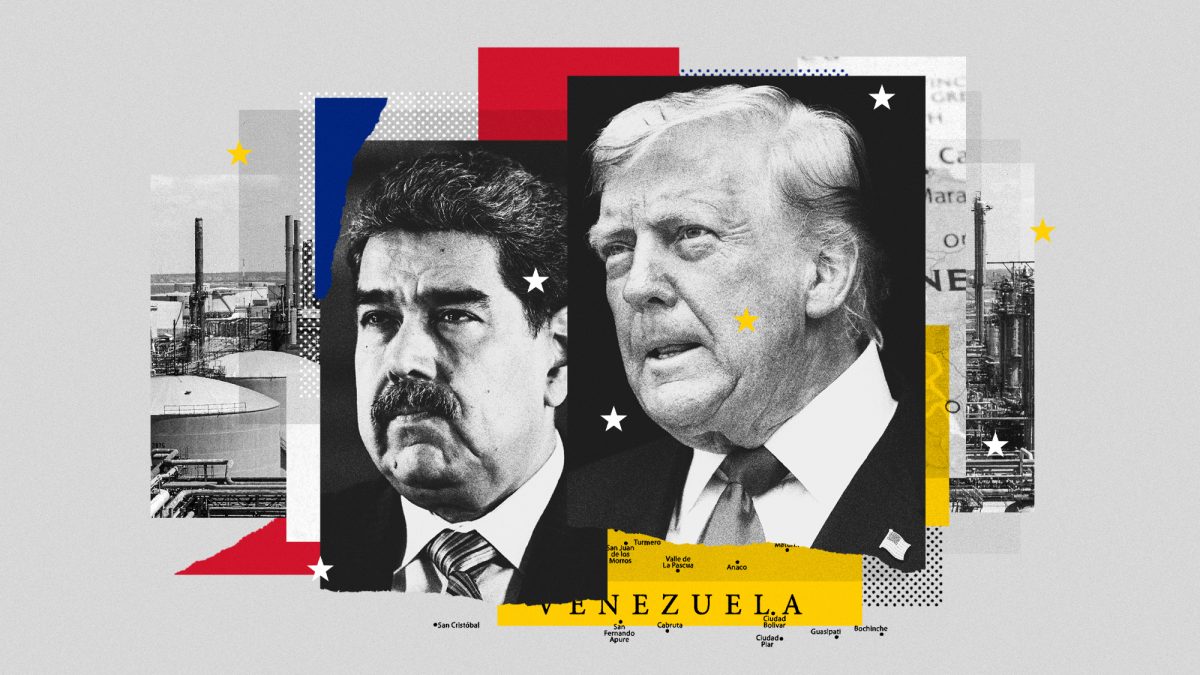
In modern times, Venezuela’s current situation represents one of the most complex political crises in the world, involving not only domestic struggles but piques the interests of powerful foreign nations, especially the United States. Something that used to be an internal economic collapse now is an international debate fighting for oil dependence and global power competition. Countries such as the United States, Russia, and China all have their eyes on Venezuela, due to interests regarding the economics of the situation or even the political side. All in all, this has made Venezuela become a symbol of struggles in the modern day and will redefine how set rules and regulations can be interpreted and acted on.
One thing that is granting Venezuela international attention is the potential to strike gold, or should I say oil? Venezuela holds one of the largest oil reserves in the world, making it optimal for a takeover now in its politically weakened state. The United States has always been on thin ice with Venezuela, while Russia has strong ties with the Venezuelan government through their military, loans, and oil investments. Russia’s involvement has often been a roadblock to U.S. influence in the Western Hemisphere, turning Venezuela into a medium for this rivalry to travel through. Venezuela’s involvement with two global superpowers has complicated efforts to resolve the crisis internally and it has spread Venezuelan politics to be a global concern rather than a national issue that was thought to occur.
Meanwhile, ordinary Venezuelans who wish to live their everyday lives must deal with any results of this international struggle. Political and economic issues and mass migration have affected neighboring countries. Millions of Venezuelans now live abroad after Maduro’s situation made international news. All of this leads to the political discussions in neighboring countries such as Colombia, Peru, Brazil, and the United States.
History
To understand the depth of Venezuela’s current situation, we must examine their historical background. For the majority of the 1900s, Venezuela’s income sustained off of their oil wealth, funding public services and making them a relatively prosperous nation, especially when compared to their neighbors during the time. However, Venezuela started to become very dependent on their oil exports and limited economic variety. While the oil prices were still high, the government was able to support social programs and fund their needs, but when prices fell, the economy became extremely vulnerable.
The rise of Hugo Chávez in the late 1990s was a turning point to how Venezuela functioned. Chávez wanted a socialist system known as the “Bolivarian Revolution,” that reduced inequality and challenged U.S. Despite his policies earning strong support from some of the communities within Venezuela, they also increased the government’s control over the economic state and harmed democratic institutions. After Hugo Chávez’s death, Nicolás Maduro became the new president and was left with an unstable economy. With Maduro at rule, economic instability, government corruption, and declining oil production accelerated Venezuela’s collapse as a successful nation.
Over time, sketchy elections under Maduro were questioned by the opposition, even international spectators, leading many countries to refuse to recognize his presidency. Protests were met with harmful force, and hundreds of his political opponents were wrongfully arrested, worsening Venezuela’s reputation. These events led to the mistrust between the government and its citizens, further deepening the social and political instabilities that roamed within the country. Once Venezuela had attracted eyes from many foreign nations, they were already in a weakened state due to the years and years of economic decline and internal political conflicts, making recovery seem nearly impossible.
Legality
The most controversial and debated issue in Venezuela’s current situation is the claim that the U.S. President Donald Trump is involved in the “illegal” removal or “kidnapping” of Venezuela’s president. This fact is being disputed amongst President Trump and other leaders and will remain a matter of international legal and political debate rather than an established fact for the foreseeable future. Supporters of this claim would argue that the forced removal of a foreign leader without authorization from the international government would therefore violate international law, making President Donald Trump and the United States guilty. From this perspective, such an action would be considered unlawful interference in the internal affairs of another country.
On the other hand, U.S. officials and supporters argue that Trump’s actions were part of rightful efforts to combat corruption, drug trafficking, and human right abuse, which can be deemed viable under international law. This would make holding leaders accountable justified, but the removal of them is still questionable. This argument highlights the tension between enforcing international laws and respecting state sovereignty, a conflict that has appeared in few, but still other global cases as well.
The disagreement over legalities reflects more broader topics in international politics. Nations allied with the United States have defended its actions or avoided partaking in this event, while countries opposing the United States, such as Russia, have seen this as the perfect opportunity to allege the United States examples of imperialism and illegal intervention. This split has reinforced global polarization and raised a series of concerns about the effect on future debates these actions may lead to. At the end of the day, the legal and moral questions surrounding these allegations remain unresolved and continue to influence how Venezuela’s crisis is understood by international spectators.