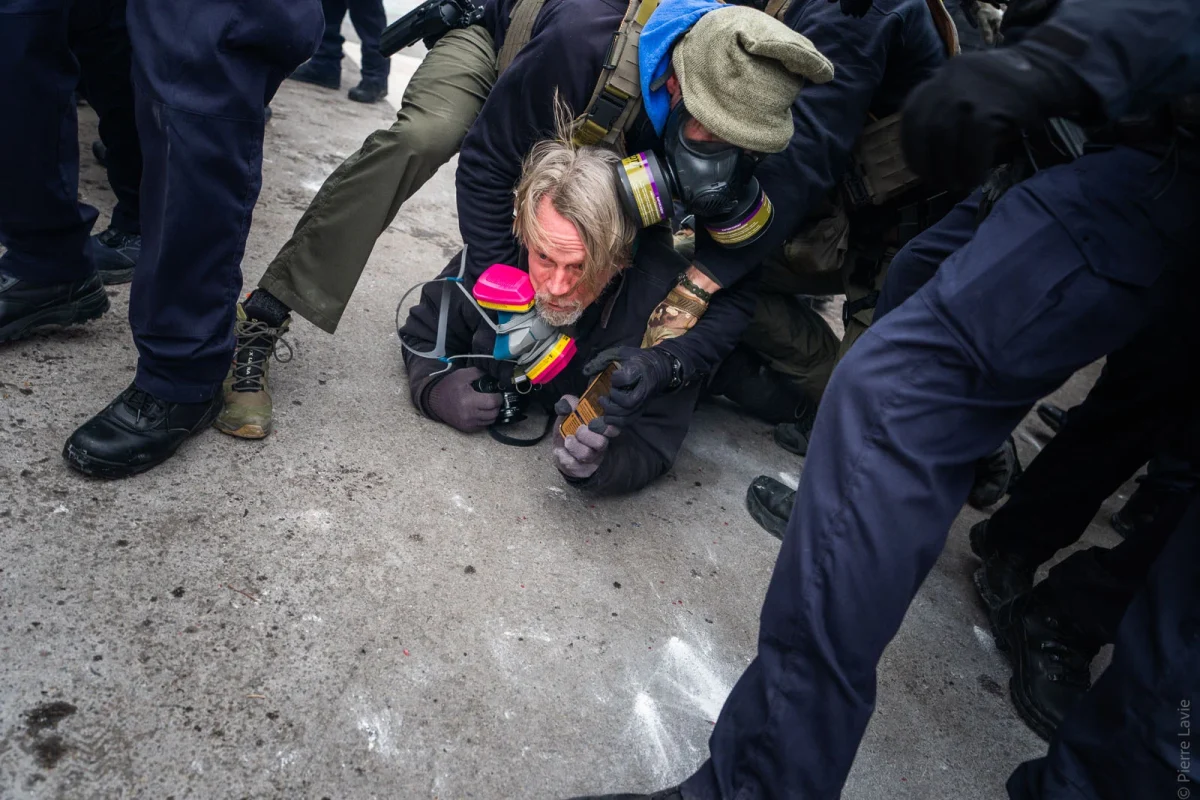
MINNEAPOLIS, MINNESOTA – Photojournalist John Abernathy was tackled by ICE agents. His last effort to save his camera, and the save of evidence of the inhumane activites occuring in Minneapolis was a success, thanks to a fellow photographer who caught the camera on Abernathy’s desperation throw.
The moment has become symbolic of a growing reality for photojournalists in the United States, as now documenting government action leads you to become a target of it.
Tensions in Minneapolis have began to boil over the murders of 37-year old Renee Good and 37-year old Alex Pretti by ICE agents. Despite mounting public outrage and controversy, the Trump Administration has continued to stand firm and support ICE, even as journalists at the scenes have documented intimidation, physical violence, and attempts to destroy visual evidence of the happenings.
Abernathy’s experience was not an oddity, however. Across the country, many other photojournalists and photographers alike have been stopped from capturing federal agents during enforcement action and protests.
Donald Trump has continuously tried to force the narrative of journalists producing “fake news” and how they are the “enemy of the people” along with having an extreme left-wing bias. Trump, in the past stated, “I don’t know” when responding to questioning of whether or not he will uphold the constitution. Constitutional rights have become conditional, upheld selectively, and when convenient, are ignored.
Photojournalists during times such as these are as important as can be. Different to written reports, photographs offer a visual story that don’t ask readers to trust the journalist’s interpretation. Photographs, a single frame in time, can expose the contradiction between what people want you to believe, compared to what truly happened.
Abernathy’s quick decision has given us visual proof of the corruption that is currently flooding our streets.
Through history, many writers, such as George Orwell and Ray Bradbury have given us their take on what life would cease to be as we began limiting free thought. Even though it seems to be a minor issue, the fight over journalism runs deep. Incredible measures have been taken by public power, including force, obstruction, and the erasure of evidence.
If we want to preserve free thought, the right to question, the ability to witness and spread truth as it happens, we cannot treat this act of preventing documentation of public power as just any other issue. For all of us, this is a fight to protect what is seen.